



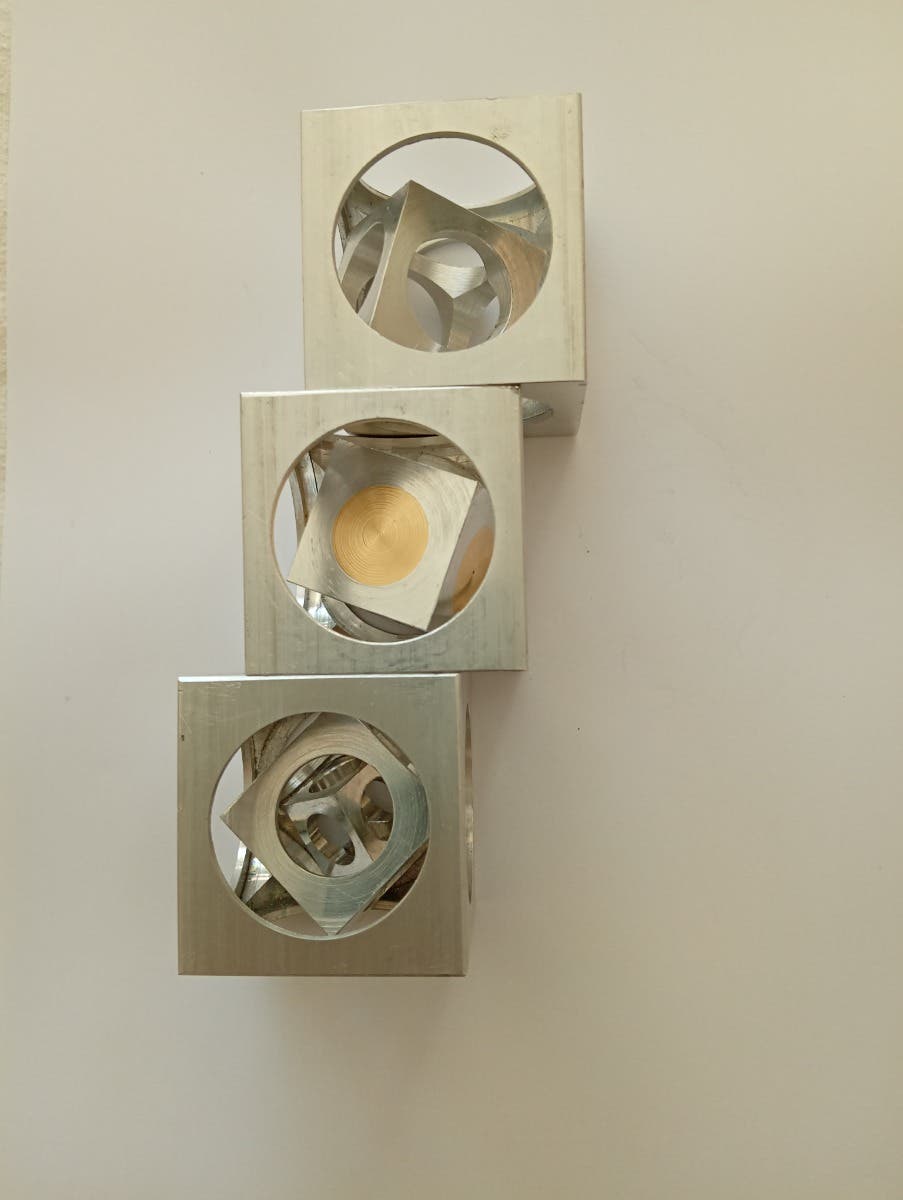
A Challenge That Turned Into Three: Turner's Cubes in Aluminium & Brass
There's nothing better than seeing the materials we supply transformed into something unique, and this latest customer project is a fantastic example of what you can achieve with a little creativity, precision, and machining skill.
Our customer Richard recently set himself the challenge of producing a turner's cube. As if completing one wasn't impressive enough, the project soon grew into something bigger, and Richard ultimately machined three turner's cubes!
Made using our 2" aluminium bar and 20mm brass rod, the finished pieces combine two contrasting metals to create an eye-catching result.
What Is a Turner's Cube?
A turner's cube is a classic machining project that tests a machinist's accuracy and turning skills. Despite the name, the finished piece isn't simply a solid cube. It features a series of carefully machined, nested shapes that appear to sit inside one another. Producing this effect requires accurate measurements, careful setup and plenty of patience.
The project is particularly popular among hobby machinists, engineering students and experienced turners looking for an interesting workshop challenge. It can also make a fantastic display piece once completed.
Richard's project shows why the turner's cube remains such an interesting machining exercise. The precise geometry immediately catches your attention, while the contrasting materials make the individual details even more noticeable.
Combining Aluminium and Brass
One of our favourite features of Richard's turner's cubes is his choice of materials. For the main body, Richard used our 2" aluminium bar. Aluminium is widely used for machining projects because of its low weight, versatility, and clean appearance.
The aluminium's bright silver finish creates an excellent base for the project, especially when paired with the 20mm brass rod used for the contrasting elements.
Brass gives the finished pieces a completely different look. Its distinctive golden colour stands out against the aluminium, highlighting the detail and giving the turner's cubes an attractive two-tone finish.
Using contrasting metals is a simple but highly effective way of adding visual interest to a machining project. Rather than blending, the aluminium and brass help define the individual features of Richard's design.
A Project That Puts Precision to the Test
A turner's cube might look relatively straightforward at first glance, but producing one successfully requires careful machining. Maintaining accuracy is particularly important. Each stage must work with the next, so measurements, positioning, and machining all play a part in achieving a balanced final piece.
That's one reason projects like this are so satisfying. You're not simply producing a functional component; you're creating something that demonstrates machining techniques and craftsmanship at the same time.
Richard clearly enjoyed the challenge too. What started as an aim to produce a single turner's cube resulted in three finished pieces, each showcasing the striking combination of aluminium and brass.
Why Aluminium Is Popular for Machining Projects
Aluminium is a popular choice for a wide range of engineering, machining, and hobby projects. One of its biggest advantages is its versatility. Aluminium bar can be turned, drilled, cut and machined into a huge range of components and finished pieces, making it useful for everything from practical engineering parts to decorative workshop projects.
Round aluminium bar is particularly useful for lathe work because it provides a convenient starting point for producing cylindrical components, profiles and other turned parts. For Richard's project, the 2" aluminium bar provided the material needed to create the main form of the turner's cubes before the additional details were machined into each piece.
Adding Contrast with Brass Rod
Brass is another favourite among machinists and model engineers, and it's easy to see why. Its warm golden appearance gives projects a distinctive finish, especially when placed alongside silver-coloured metals such as aluminium. Brass rod can be used for decorative features and a wide variety of engineering and hobby applications.
The result is a finished project that doesn't just demonstrate machining skill — it also looks fantastic on display.
Choosing Materials for Your Next Machining Project
Projects like Richard's remind us that material choice can significantly affect the final result.
When planning a machining project, it's worth thinking about more than simply the dimensions of the material you need. The colour, finish and characteristics of different metals can all contribute to the finished design.
Combining different materials can be particularly effective for decorative projects. Aluminium and brass are a classic pairing because their contrasting colours immediately distinguish the different sections of a component or design.
Whether you're producing a turner's cube, practising your lathe skills, making a model or creating your own engineering project, choosing the right starting material can make all the difference.
Feeling Inspired?
Richard's project is a brilliant example of turning a simple personal challenge into something worth showing off.
A huge thank you to Richard for sharing his finished turner's cubes with us — brilliant work!
If Richard's project has inspired you to head into the workshop, explore our range of aluminium bar, brass rod and other metals to find the material for your next machining project.




Share this: