



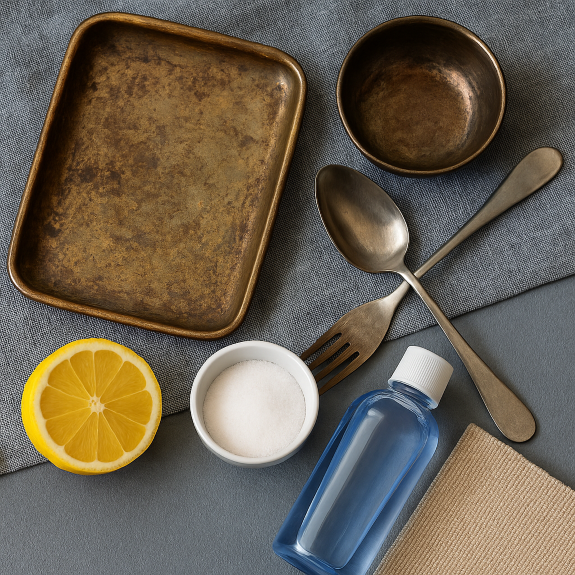
At first glance, tarnished metal can appear permanently damaged, but in many cases, it just needs the right care. From brass and copper to stainless steel and silver-plated pieces, there are several ways to remove tarnish and bring back the original finish. This guide covers practical cleaning methods using everyday items, as well as tips for more specialist materials.
We will also look at how tarnish forms, how to remove it safely, and how to keep your metal items gleaming for longer.
Understanding tarnish and its effects on metal
Tarnish is a thin layer of corrosion that develops when metal reacts with oxygen, moisture, or pollutants in the air. This reaction can cause discolouration, dullness, or a dark film on the metal's surface. This reaction is widespread in metals such as copper, brass, and silver, which are more prone to surface changes when exposed to air and moisture.
Each metal tarnishes differently. Aluminium tends to oxidise with a chalky, white residue. Stainless steel, particularly untreated grades, can show spotting or rainbow hues. Brass and copper darken and may develop green or brown patinas, while silver often turns black.
Tarnishing does not always damage the metal underneath, but it can affect appearance and functionality. Regular cleaning prevents build-up and preserves the surface finish.
Essential materials for cleaning tarnished metal
You do not always need harsh chemicals or specialist products to tackle tarnish. Many everyday household items can work surprisingly well:
-
Baking soda helps lift tarnish gently without damaging the surface.
-
White vinegar breaks down oxidation and loosens built-up grime.
-
Lemon juice, its natural acidity restores brightness..
-
Salt, when mixed with vinegar or lemon, enhances the cleaning effect.
-
Soft cloths, especially cotton or microfibre, are ideal for polishing without scratching.
-
Old soft toothbrushes, suitable for intricate or textured areas
Commercial metal cleaning solutions are also available for more stubborn tarnish or special finishes such as polished stainless steel.
Techniques for removing tarnish from various metals
Not all metals respond the same way to cleaning, so it is essential to choose the correct method for the material. Here are some proven approaches:
-
Baking soda paste: Add a splash of water to baking soda to form a paste. Using a soft cloth or sponge, apply the paste gently to the surface, carefully rub then rinse off and dry well.
-
Vinegar and salt mix: Combine equal amounts of warm water and vinegar, then add a spoonful of salt. This can be used to soak smaller items or wiped on with a cloth; it works exceptionally well on brass and copper.
-
Flour, salt, and vinegar paste: Combine the three ingredients into a thick paste. Spread it over the tarnished metal and leave it for around half an hour before wiping it clean. It is a good option for restoring silver-plated pieces.
-
Lemon and salt rub: Rub a cut lemon sprinkled with salt directly on the tarnished surface. Rinse well and polish dry. A good choice for outdoor aluminium items.
When the goal is to achieve a smooth reflective surface on materials like stainless steel or polished stainless steel, then tools like buffing wheels or specialist polishing creams will prove particularly useful to achieve this high-quality finish.
Cleaning brass with vinegar - A step-by-step guide
Brass often tarnishes to a dull brown, but vinegar can bring it back to life. Here is a simple method:
-
Mix equal parts of white vinegar and water in a bowl.
-
Add a spoonful of salt and stir until dissolved.
-
Soak the brass item for 10–15 minutes (or apply with a cloth if the item is too large).
-
Scrub the surface gently with a soft brush
-
Rinse with clear water and buff dry with a soft cloth.
-
Buff with a dry microfibre cloth to enhance shine.
Tip: Avoid soaking antique or lacquered brass. Test a small area first to prevent damage.
How to clean tarnished jewellery effectively
Tarnished jewellery requires a gentle approach to protect delicate finishes and stones:
-
Silver jewellery: Using a baking soda and water paste, rub gently with a soft toothbrush, rinse, and polish dry.
-
Gold-plated items: Avoid abrasive pastes. Use warm, soapy water and a microfibre cloth.
-
Gemstone jewellery: Avoid using vinegar or acidic cleaners. Use warm water and mild soap only, make sure all soap residue is removed when rinsing
If unsure, consult a jeweller. Some materials, especially vintage or costume jewellery, may require specific care.
Restoring shine to silver-plated items
Silver-plated objects can lose their shine quickly, but can often be revived without specialist tools:
-
Line a bowl with aluminium foil, shiny side up.
-
Add a tablespoon of baking soda, hot water, and a pinch of salt.
-
Submerge the item so it touches the foil; this triggers a mild chemical reaction that lifts tarnish.
-
Leave for 5–10 minutes, then remove and dry with a soft cloth.
Repeat if needed. Avoid polishing too often, as silver plating can wear away over time.
Preventing future tarnish - Tips and tricks
To keep your metal items cleaner for longer:
-
Store in dry, airtight containers where possible.
-
Use anti-tarnish strips or silica gel packs for silverware and jewellery.
-
Avoid prolonged contact with water or acidic substances.
-
Polish occasionally with a clean, dry, cloth to maintain shine.
-
Wrap items in acid free tissue paper.
Tarnishing is a natural process, but you can keep your metal items looking their best for years to come with regular care and cleaning..
Explore our full range of metal materials at metals4U, including Aluminium, Brass, Copper, Stainless steel, and Polished stainless steel.




Share this: